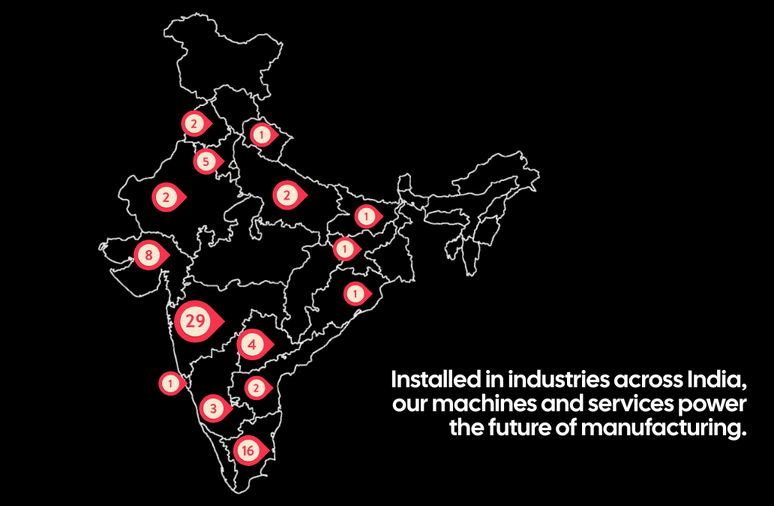
Reverse Engineering & Digital Replication Services

Scan - Design - Manufacture

From capturing complex geometries to delivering parametric CAD models, our end-to-end reverse engineering solutions streamline your product development journey.

Let's Discuss
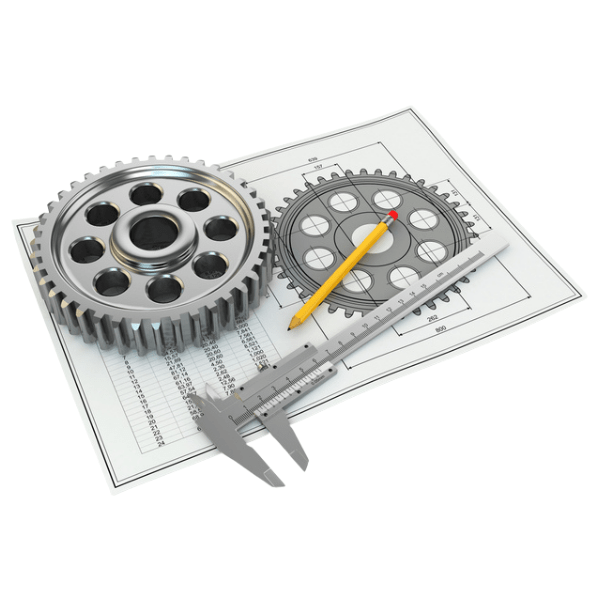
Trusted by 1,500+ leading companies for additive manufacturing.

We help multiple sectors identify and implement the right 3D printing solutions: cost optimisation, faster timelines, and long-term reliability.


Company Logo 26
Company Logo 2
Company Logo 3
Company Logo 4
Company Logo 5
Company Logo 6
Company Logo 7
Company Logo 8
Company Logo 9
Company Logo 10
Company Logo 11
Company Logo 12
Company Logo 13
Company Logo 14
Company Logo 15
Company Logo 16
Company Logo 17
Company Logo 18
Company Logo 19
Company Logo 20
Company Logo 21
Company Logo 22
Company Logo 23
Company Logo 24
Company Logo 25
Company Logo 1
Company Logo 27
Company Logo 28
Company Logo 29
Company Logo 30
Company Logo 31

Our Process

From scan to CAD, our digital workflow explained.

Step 1

Requirement Gathering

Understand customer objectives like part replication, redesign, or documentation through discussions and part inspection.

Step 2

3D Scanning & Data Capture

Use 3D scanning or precision measurement tools to capture accurate geometry of the physical part.

Step 3

Data Processing

Process scan data by cleaning, aligning, and preparing it for CAD modeling.

Step 4

CAD Modeling & Design

Create parametric or surface-based CAD models from scan data.

Step 5

Validation & Delivery

Validate CAD models against scan data and deliver files in required formats (STEP, STL, IGES, 2D drawings).

The 3D tools & software we use to deliver excellence.

The complete suite of 3D design and engineering tools we use for reliable, print-ready outputs.

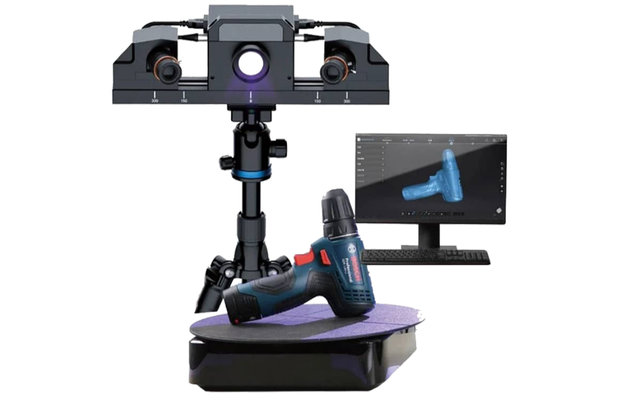
3D Scanners

High-precision 3D scanners (laser or structured light) are used to capture accurate surface geometry of physical parts, enabling precise digital replication.
TRT Section Image

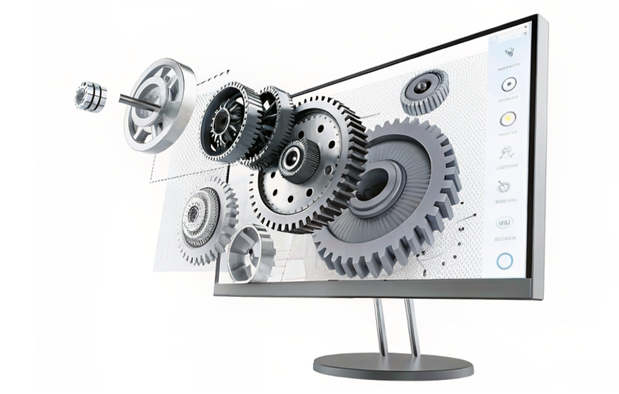
CAD Modeling Software

Advanced CAD tools like SolidWorks, Siemens NX, and Geomagic Design X are used to convert scan data into fully parametric and editable 3D models.
TRT Section Image

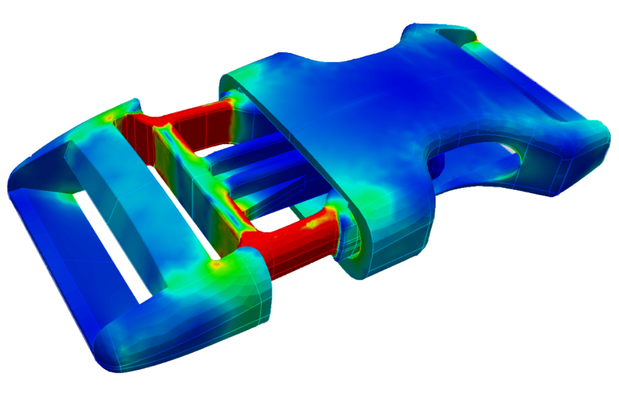
FEA Analysis

Finite Element Analysis (FEA) is applied to evaluate stress, thermal, and structural performance, helping optimize part design before production.
TRT Section Image

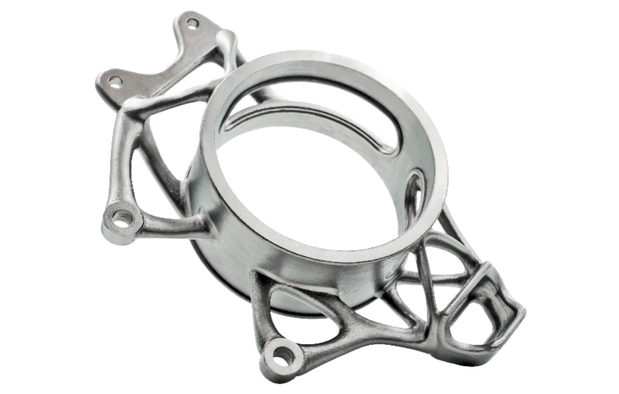
DFAM Design

Design for Additive Manufacturing (DFAM) principles are applied to enhance part functionality, reduce weight, and make designs suitable for 3D printing.
TRT Section Image

Let's connect

Contact Form Image

Frequently Asked Questions

Reverse engineering involves capturing the geometry of an existing physical part using 3D scanning or measurement tools to create an accurate digital CAD model.
Components from automotive, aerospace, medical, industrial machinery, consumer products, and even legacy or broken parts can be reverse engineered regardless of complexity.
We use structured light scanners, laser scanners, and CMMs depending on part size, geometry, and required accuracy.
Accuracy ranges from ±10 microns to ±100 microns depending on the scanner used and surface conditions of the part.
We use industry-standard CAD tools such as Fusion 360, Siemens NX, Geomagic Design X, and Rhino for surface and solid modeling.
Yes, once the part is converted to CAD, we can redesign, optimize, or modify it to improve functionality, fitment, or manufacturability.
We provide files in STEP, IGES, STL, Parasolid, and native formats like .SLDPRT or .PRT depending on your downstream requirements.
Timelines vary by part size and complexity, but simple parts can be completed within 1-3 days, while complex assemblies may take 1-2 weeks.
Yes, scanned data can be compared against original CAD or drawing specs to check dimensional deviations using inspection software.
Yes, even partially damaged or worn parts can be scanned and digitally repaired or reconstructed during the modeling process.
WhatsApp